Composition
Historically, object-oriented languages are defined by the following: encapsulation, inheritance, and polymorphism ( “classical” OO). Thus, if a language does not implement all of these, it is generally not considered completely object-oriented. Along with these three terms, I always include composition in the mix; thus, my list of object-oriented concepts looks like this:
Encapsulation
Inheritance
Polymorphism
Composition
Matt Weisfeld
It is natural to think of objects as containing other objects. A television set contains a tuner and video display. A computer contains video cards, keyboards, and drives. The computer can be considered an object unto itself, and a flash drive is also considered a valid object. You could open up the computer and remove the hard drive and hold it in your hand. In fact, you could take the hard drive to another computer and install it. The fact that it is a standalone object is reinforced because it works in multiple computers.
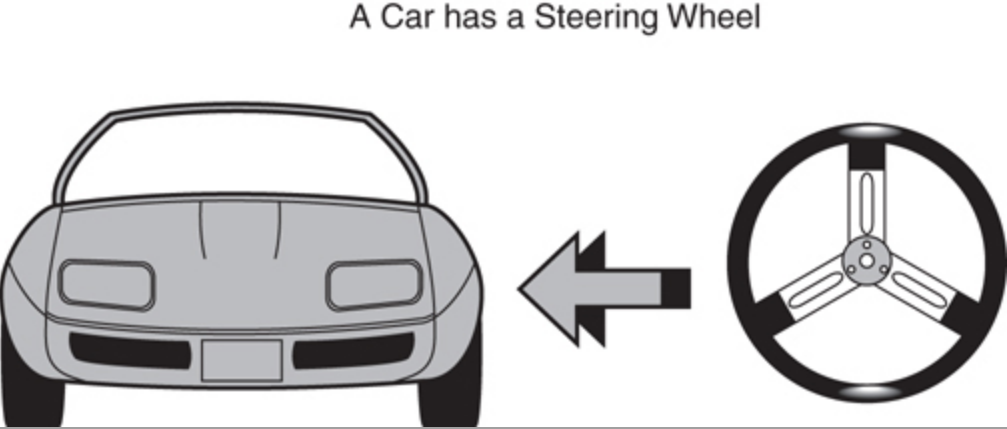
Most people would think it natural for a car to contain an engine. However, a car contains many objects besides an engine, including wheels, a steering wheel, and a stereo. Whenever a particular object is composed of other objects, and those objects are included as object fields, the new object is known as a compound, an aggregate, or a composite object.
Composition can be powerfully combined with polymorphism. This means an object can contain parts referenced by their abstract type (like an interface or an abstract base class) instead of their specific concrete implementation. For instance, a Car might use an IEngine interface to interact with its engine. This allows different engine implementations (a V6Engine, an ElectricMotor) to be swapped in or out, as long as they satisfy the IEngine contract, without needing to change the Car class itself. The Car interacts with whatever engine part it holds using the common interface methods defined by IEngine.
See Also: